ABYC Certified Marine Systems Advisor

Kelley Hale

Marine systems technician specializing in electrical integration, shore power systems, and precision installations. Training at the Northwest School of Wooden Boat Building. Available for marine systems work starting August 2026.

View Projects
Kelley Hale

Kelley Hale

I'm an ABYC Certified Marine Systems Advisor completing the Marine Systems Program at the Northwest School of Wooden Boat Building in Port Hadlock, Washington — one of the premier programs for traditional and modern boatbuilding in the country.

I come to marine systems with a background in construction and woodworking. I built houses with my father as a young adult, which gave me a strong foundation in craftsmanship, problem-solving, and hands-on teamwork. I've carried those habits into my training, where I've developed skills across marine electrical systems, plumbing, heating, diesel and outboard engines, and corrosion prevention.
ABYC Certifications
Certified Marine Systems Advisor
Passed Marine Systems Certification Exam
Passed Marine Engines & Fuel Systems Certification Exam
June 2026 Marine Electrical Certification Exam
Northwest School of Wooden Boat Building — Marine Systems Program
2025 – 2026
Selected Work

Projects

Hands-on marine systems work — from shore power integration on cruising sailboats to complete electrical builds on custom vessels.

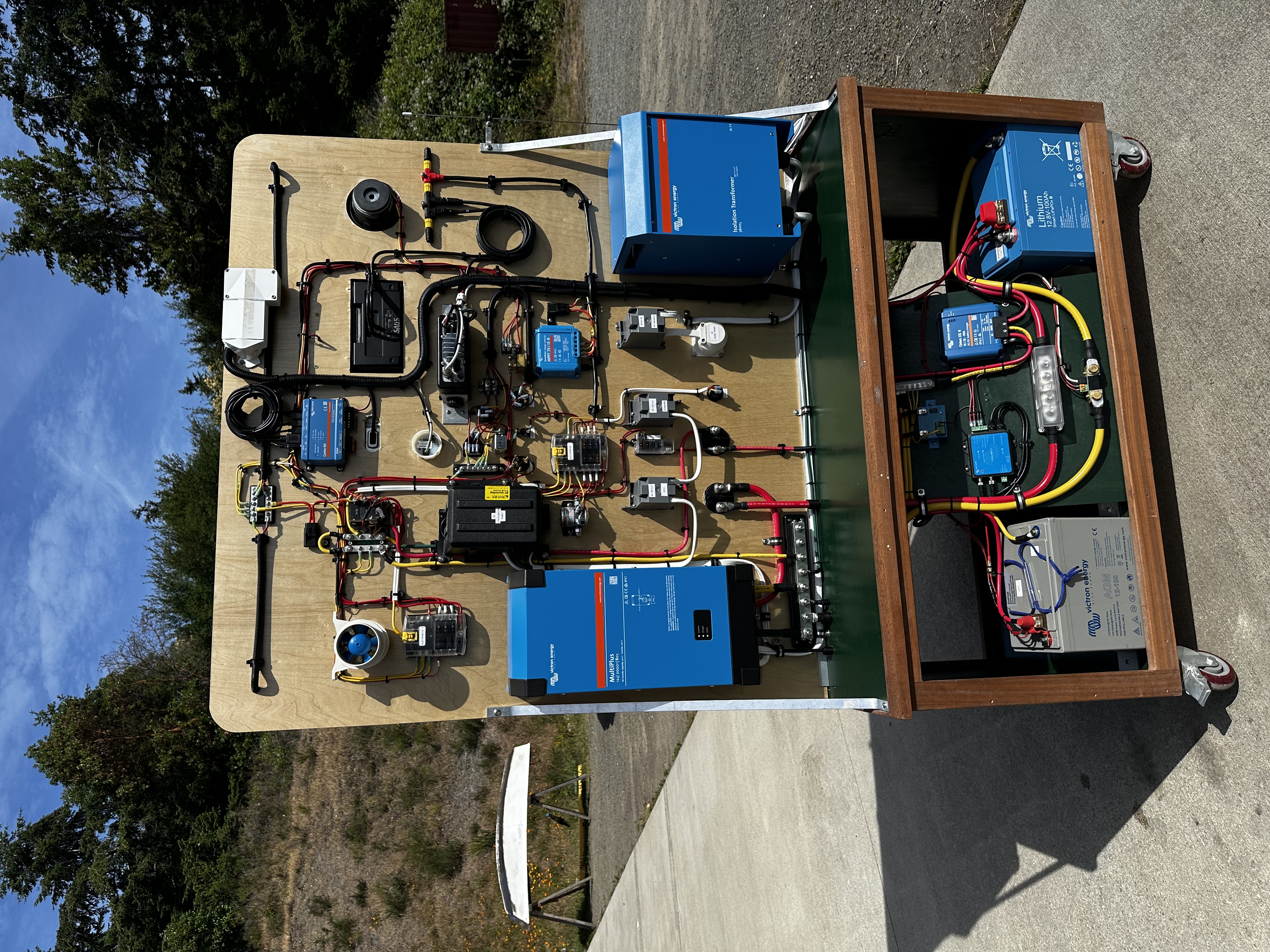
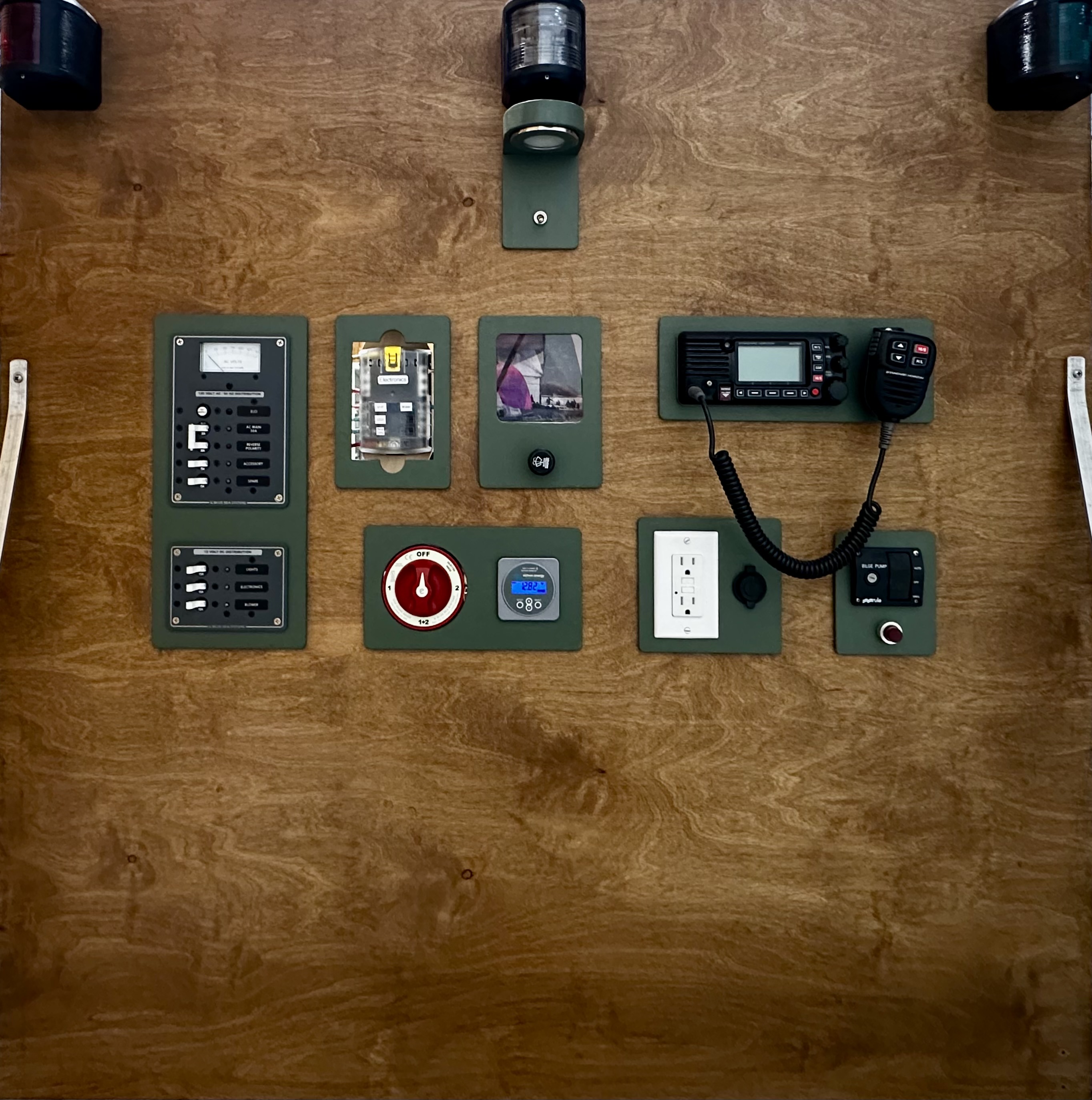
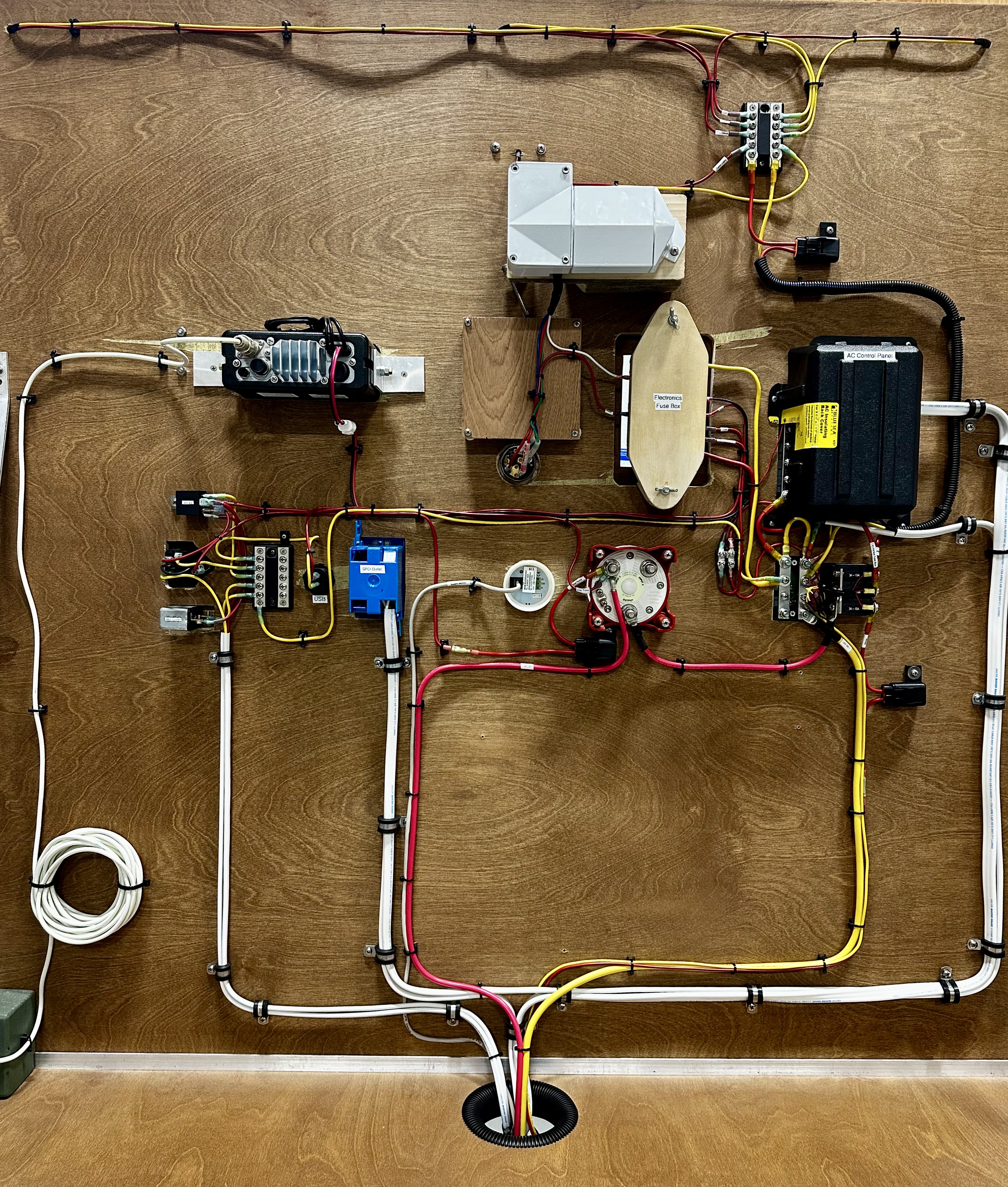
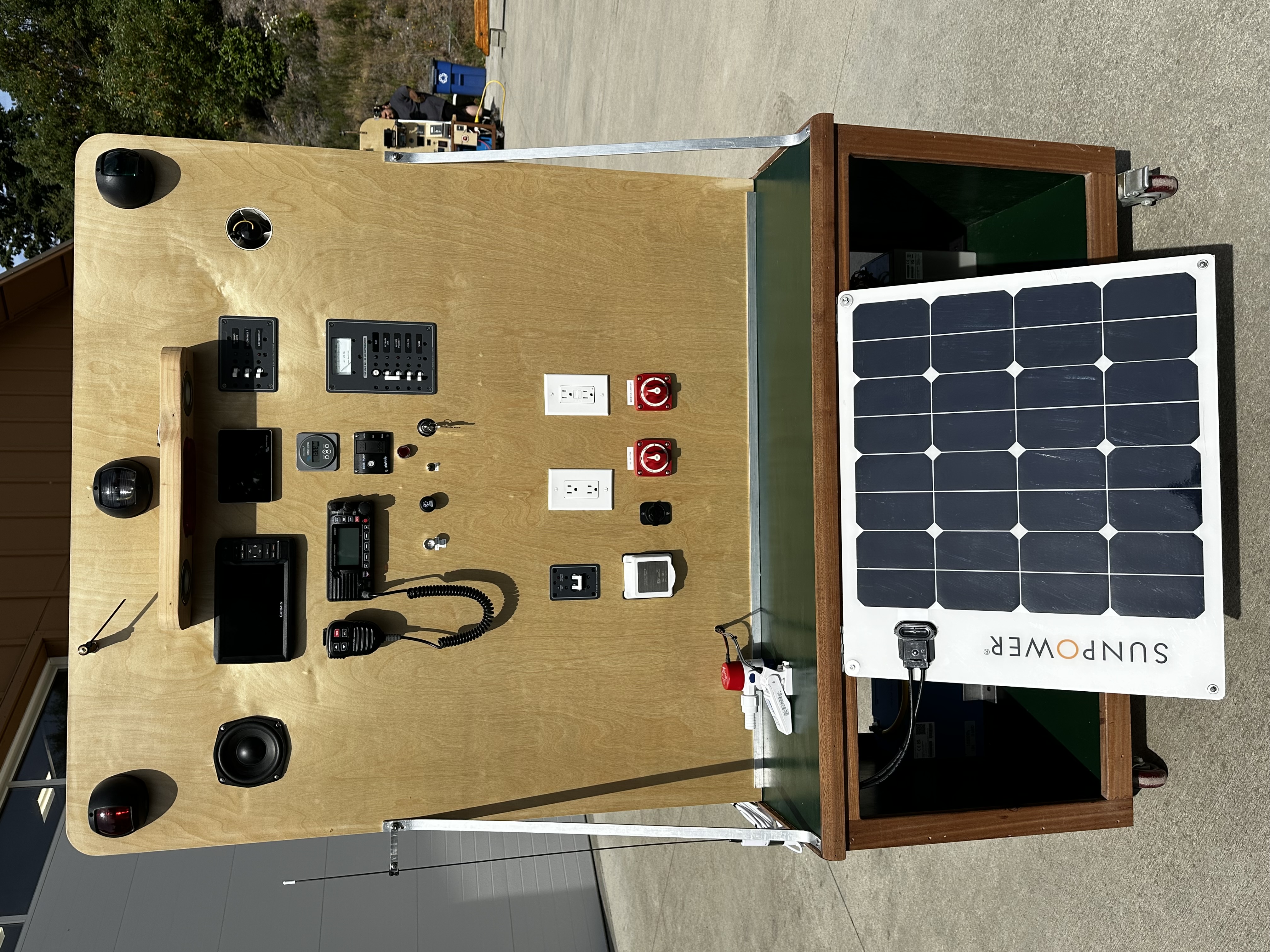
Complete AC/DC electrical systems mock-up with green faceplates, distribution panels, VHF radio, and navigation lighting
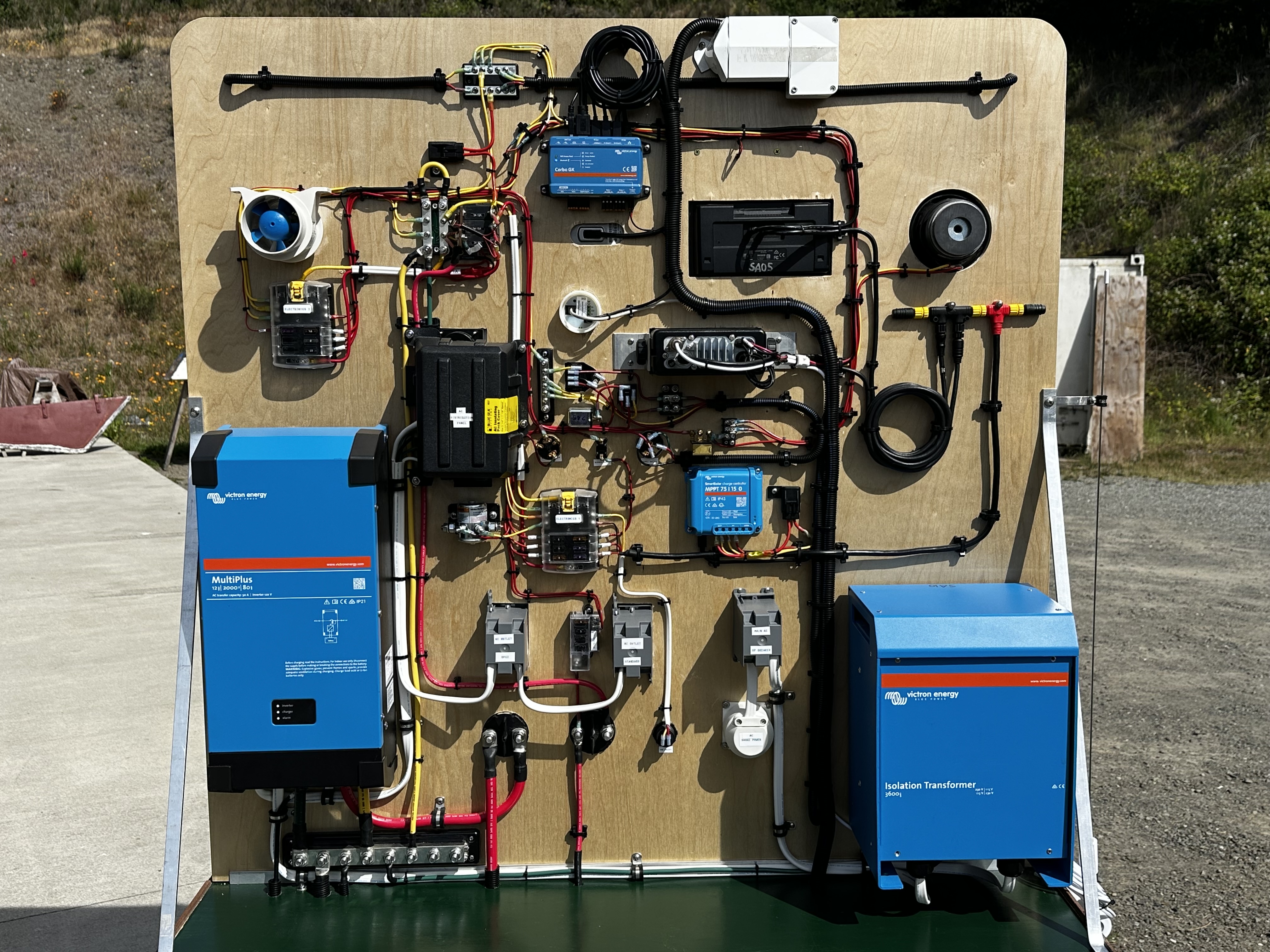
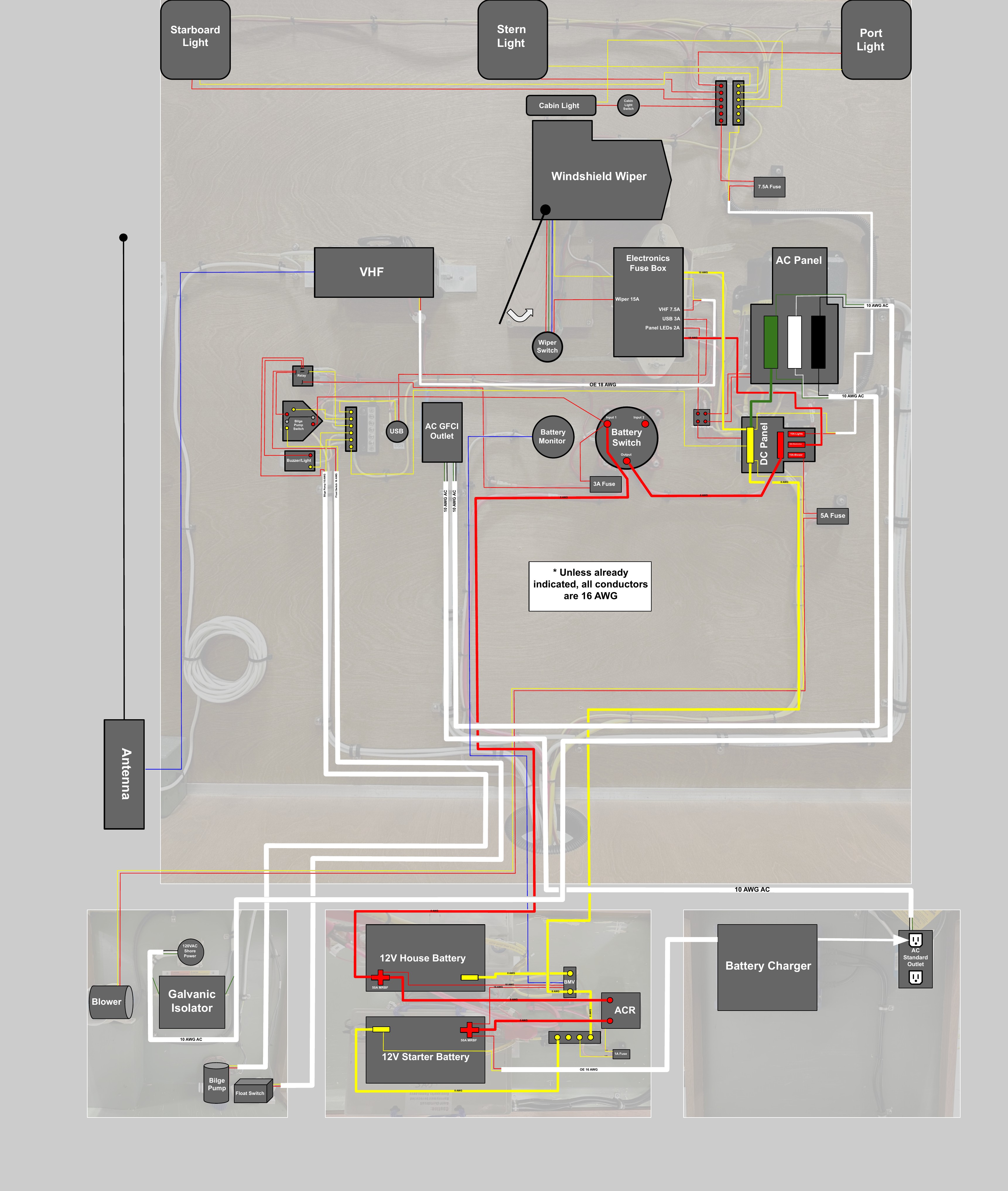
Annotated wiring diagram showing color-coded AC and DC conductor routing with labeled components
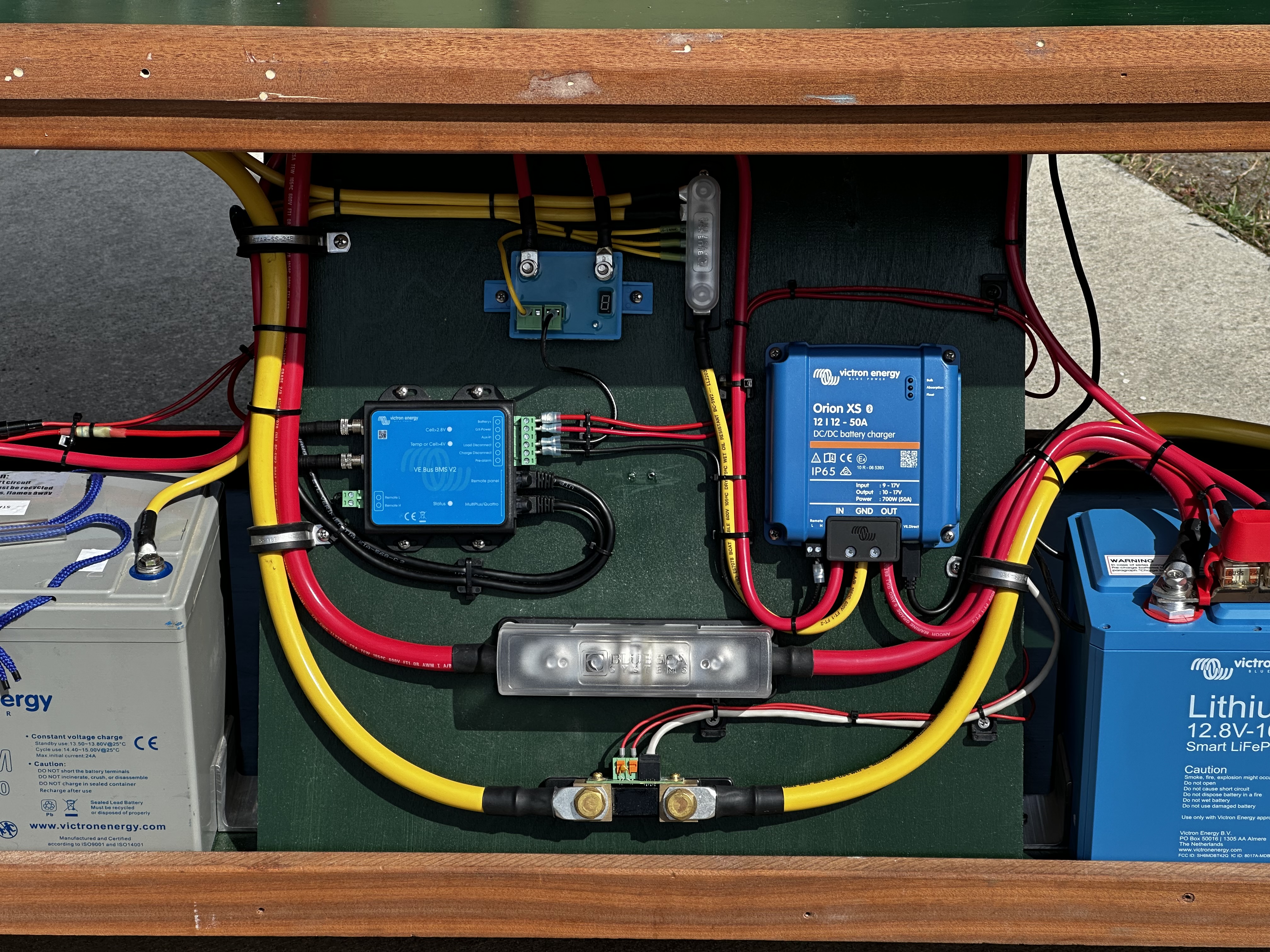
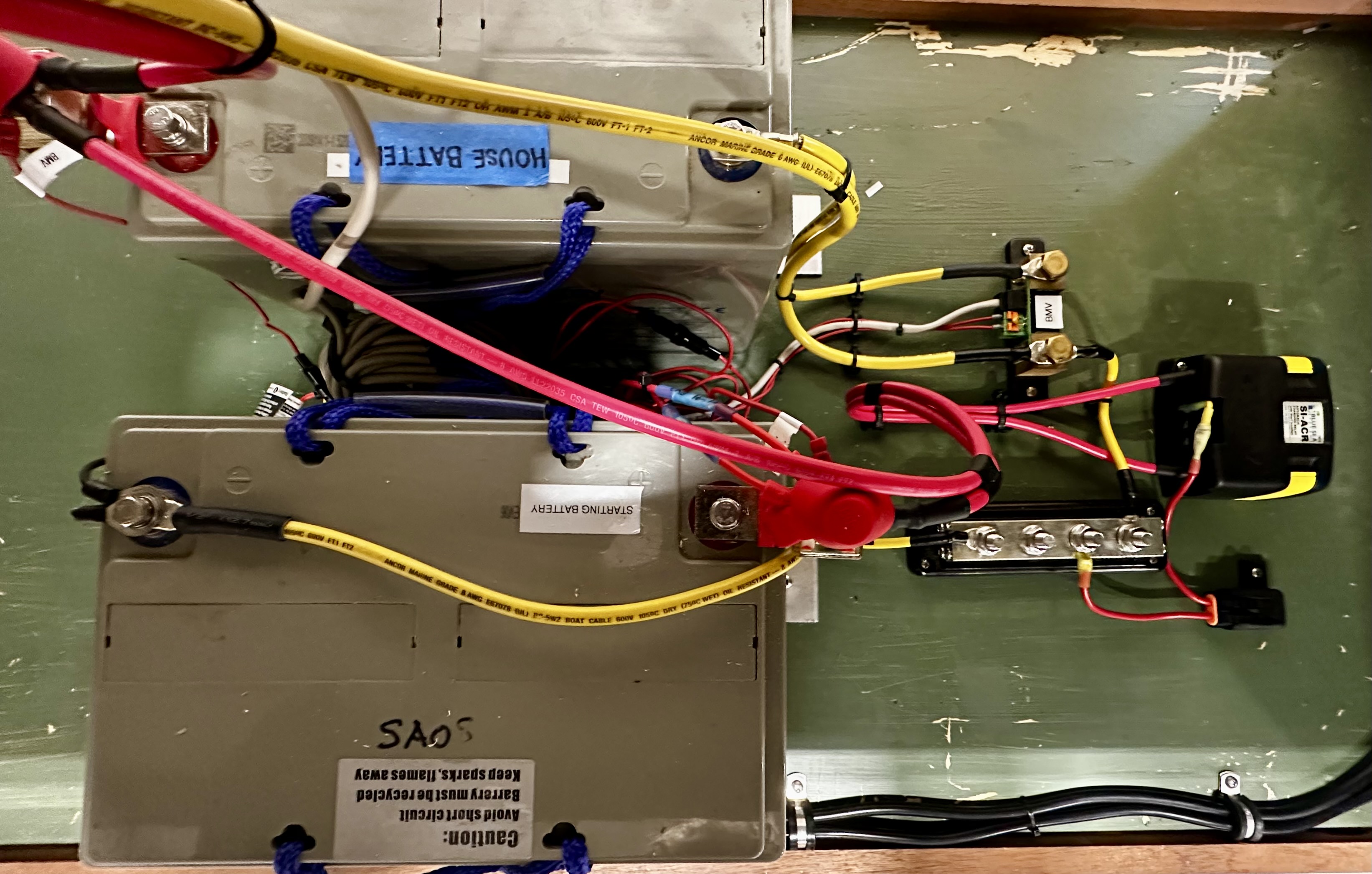
Dual-bank battery setup with house and starter batteries, ACR, MRBF fuses, and bus bar
Full system wiring layout showing all conductor routing and component placement
AC/DC Integrated System

Marine Electrical Systems Mock-Up

1st Quarter Project — NWSWB Marine Systems Program

Designed and built a full-scale mock-up of a small vessel's complete electrical system, integrating 12V DC and 120V AC systems with emphasis on ABYC compliance, clean layout, and real-world serviceability.

DC System

Built around a dual-bank configuration (engine start and house), with 2 AWG marine-grade tinned copper primary cables and a 150A Class T fuse within 7 inches of the house battery positive terminal per ABYC E-11. The fused distribution panel supplies branch circuits for navigation lighting, cabin lighting, bilge pump with automatic float switch and manual override, windshield wiper, VHF radio, and USB charging — all sized to meet ABYC voltage drop requirements.

AC System

Fed via a 30A shore power inlet using 10/3 AWG marine-grade cable through a main breaker with reverse polarity indication. A ProSafe FS30 galvanic isolator is installed in the AC grounding conductor per ABYC A-28 to mitigate corrosion. A Guest ChargePro battery charger is integrated on a dedicated AC breaker, with system monitoring via Victron Bluetooth diagnostics.

Helm Panel Design

Designed the helm-facing layout with an emphasis on intuitive user interaction. Components are grouped by function using custom green faceplates — bilge pump controls on a single panel, cabin lighting with its switch, windshield wiper with its control. The goal was a clear, user-friendly interface where the relationship between switches and their loads is immediately apparent, even without labeling.

Standards Compliance

During the build, I identified and corrected an ABYC compliance oversight — conductors from the DC distribution panel to the navigation lighting overcurrent protection exceeded the 7-inch unsheathed limit. I retrofitted the installation with appropriate sheathing to bring the system into compliance. This correction reinforced the importance of continuous standards verification throughout the build process.

AC/DC Integration ABYC E-11 Shore Power Galvanic Isolation Panel Design VHF Installation
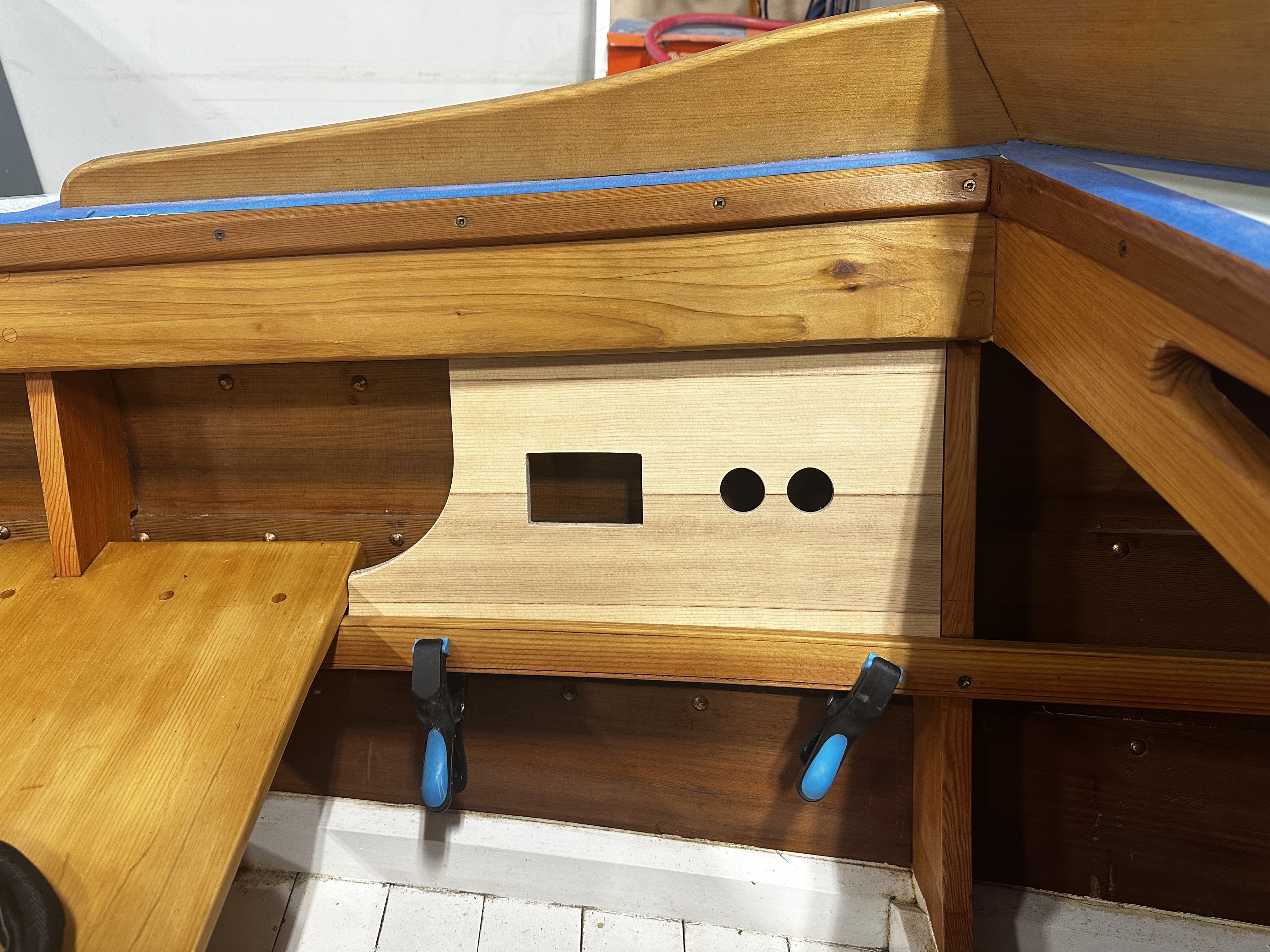
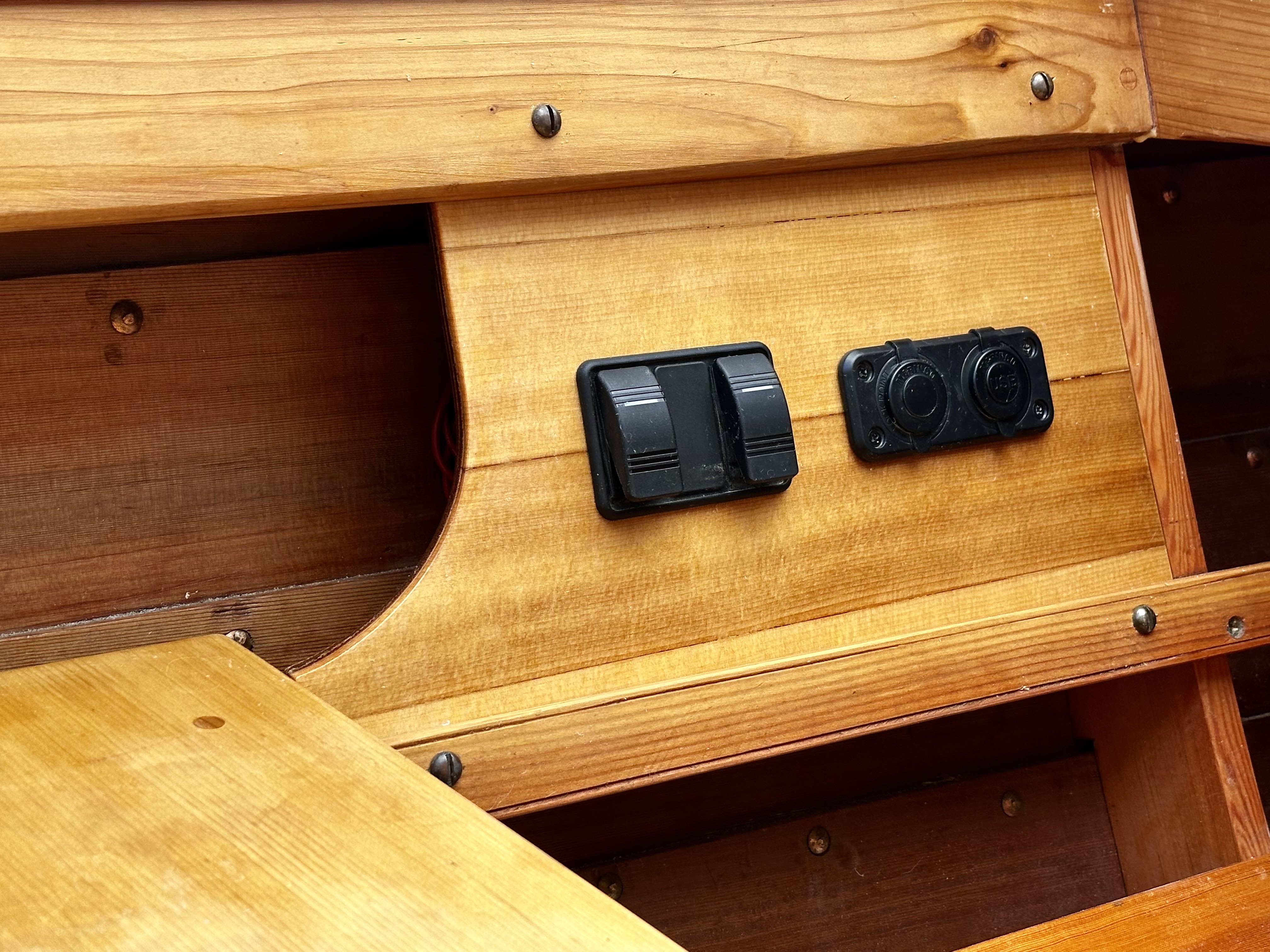
Custom marine-grade plywood console panel with cutouts for electrical controls and gauges
12-foot custom wooden runabout in the NWSWB workshop
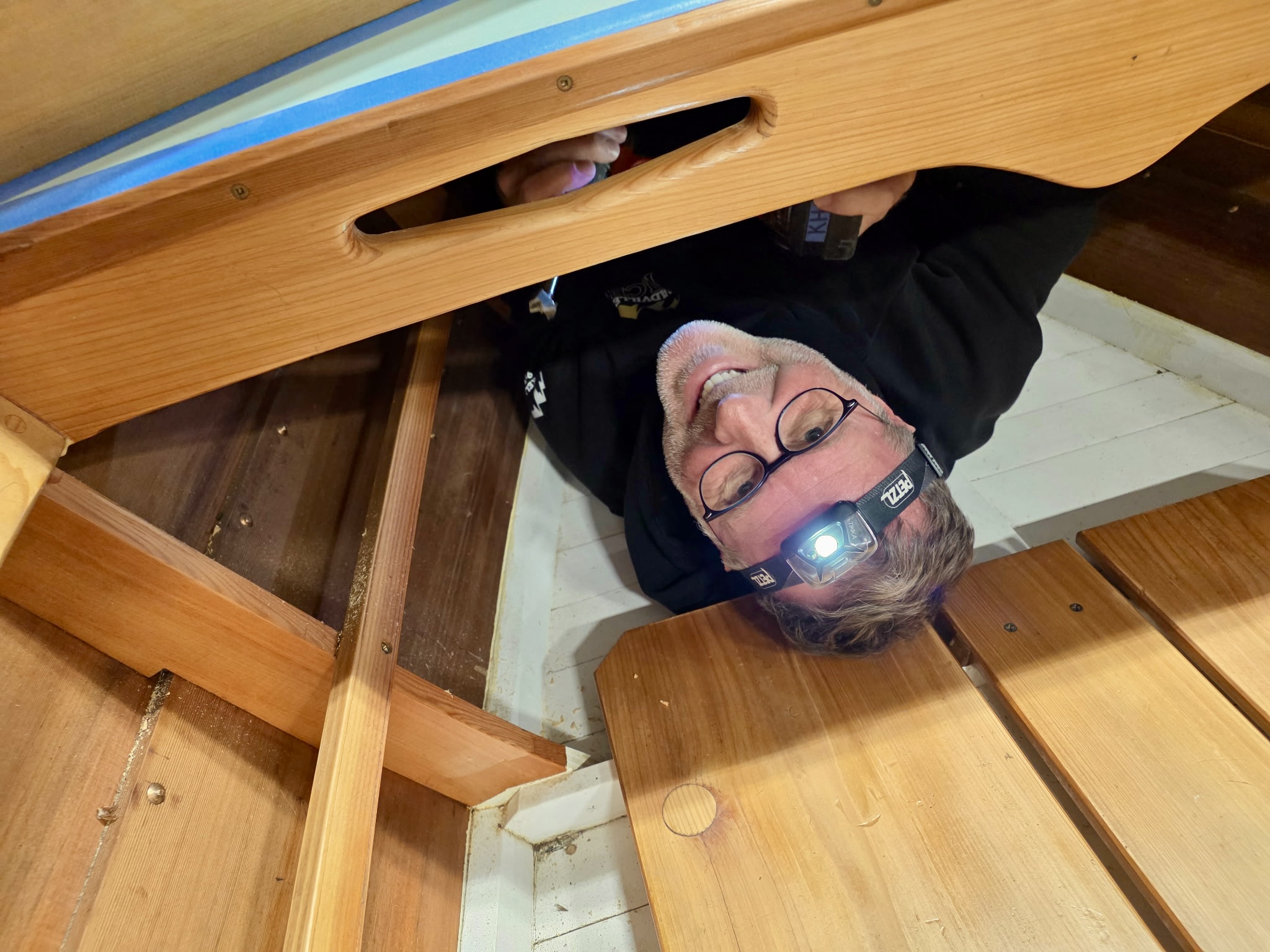
Kelley Hale working inside the runabout hull
Full Electrical Build • In Progress

Custom Runabout Electrical System

12' Custom Wood Runabout — NWSWB Student Build

Designing and installing the complete electrical system on a custom 12-foot wooden runabout built at the Northwest School of Wooden Boat Building. While the system itself is relatively simple, the project demands a high level of precision, planning, and aesthetic integration to match the craftsmanship of the vessel.

System Design

The electrical system includes an AGM starter battery, a bilge pump circuit, a fused distribution block, a Victron battery charger, and a dual-USB charging outlet. All components are being installed with careful attention to ABYC-aligned practices, including proper conductor sizing, circuit protection, and clean, serviceable routing.

Custom Panel Fabrication

A significant portion of the project has involved designing and fabricating custom console panels from marine-grade plywood to house the electrical controls. These panels were shaped and finished to complement the boat's woodwork, requiring careful consideration of both form and function. The goal is to create an installation that not only performs reliably but also visually integrates with the vessel's handcrafted aesthetic.

Expanding Scope

In addition to the electrical system, the project includes routing and installing a mechanical steering system and fuel distribution system, further contributing to the vessel's completion as a fully functional boat.

Key Takeaway

This project highlights the ability to execute clean, functional electrical installations while respecting and enhancing the visual integrity of a traditionally crafted vessel — where every wire run, every panel edge, and every fastener is part of the finished product.

DC Systems Panel Fabrication Battery Systems Steering Fuel Systems
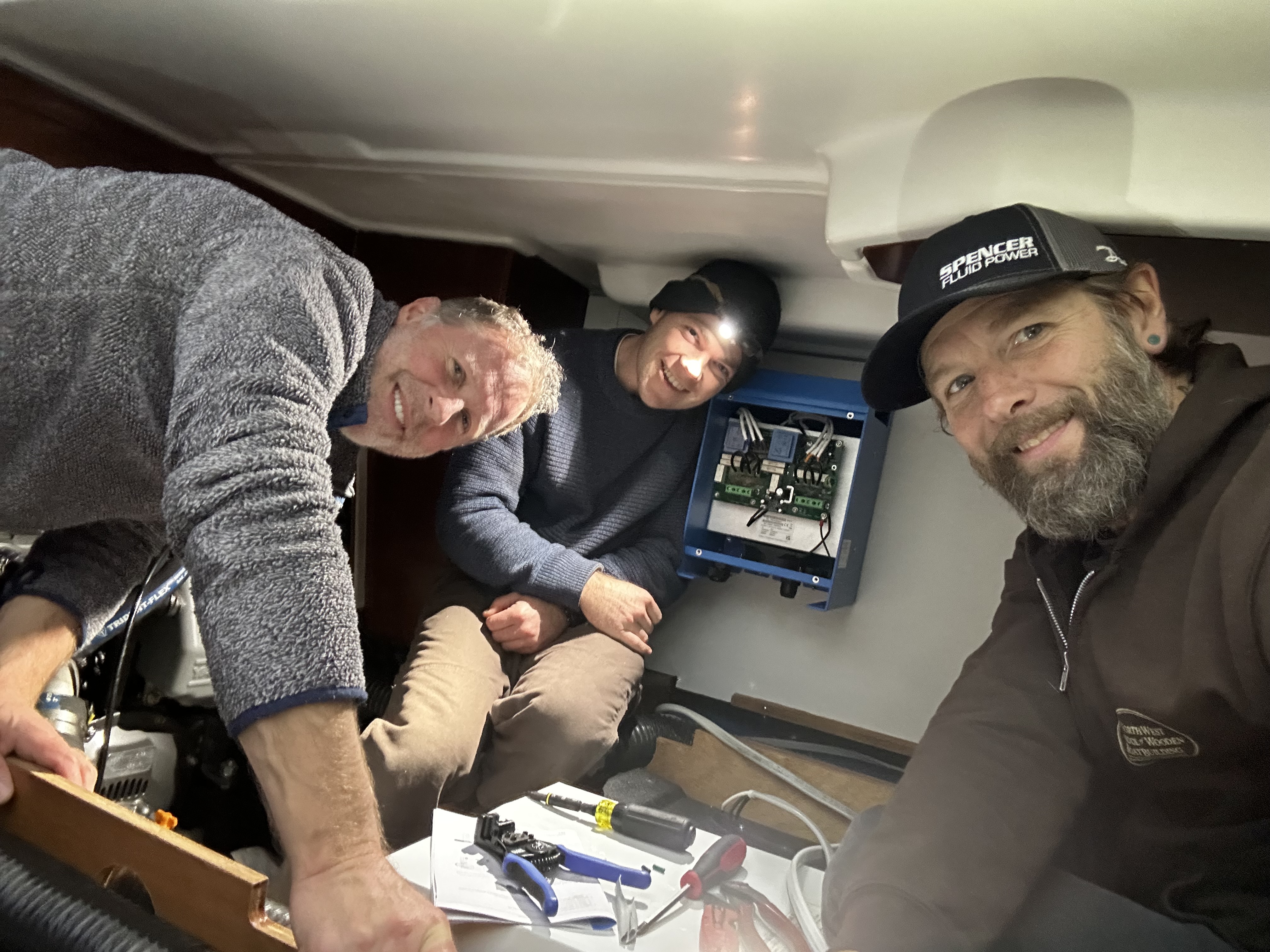
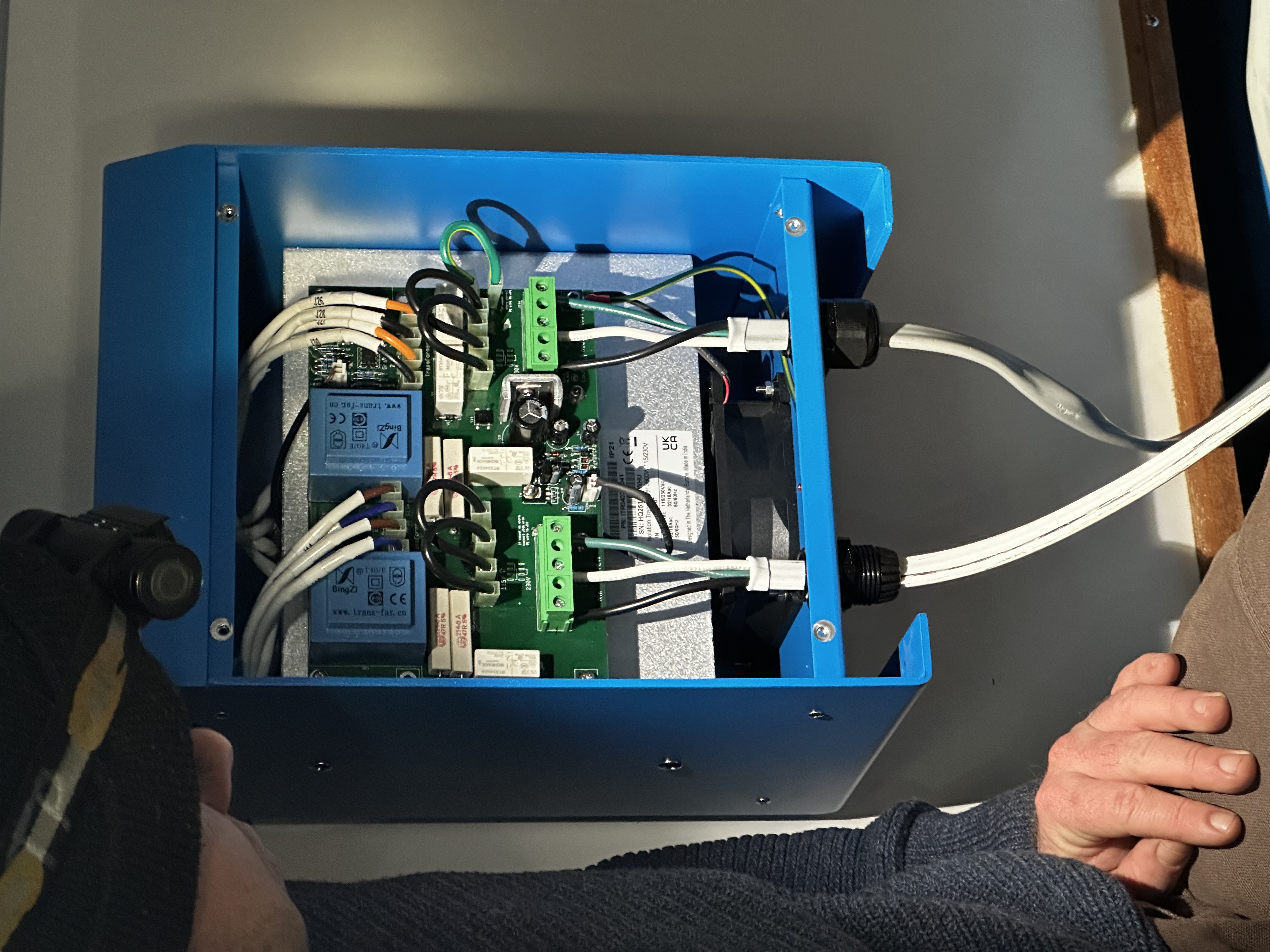
Team installing Victron isolation transformer in stern cabin
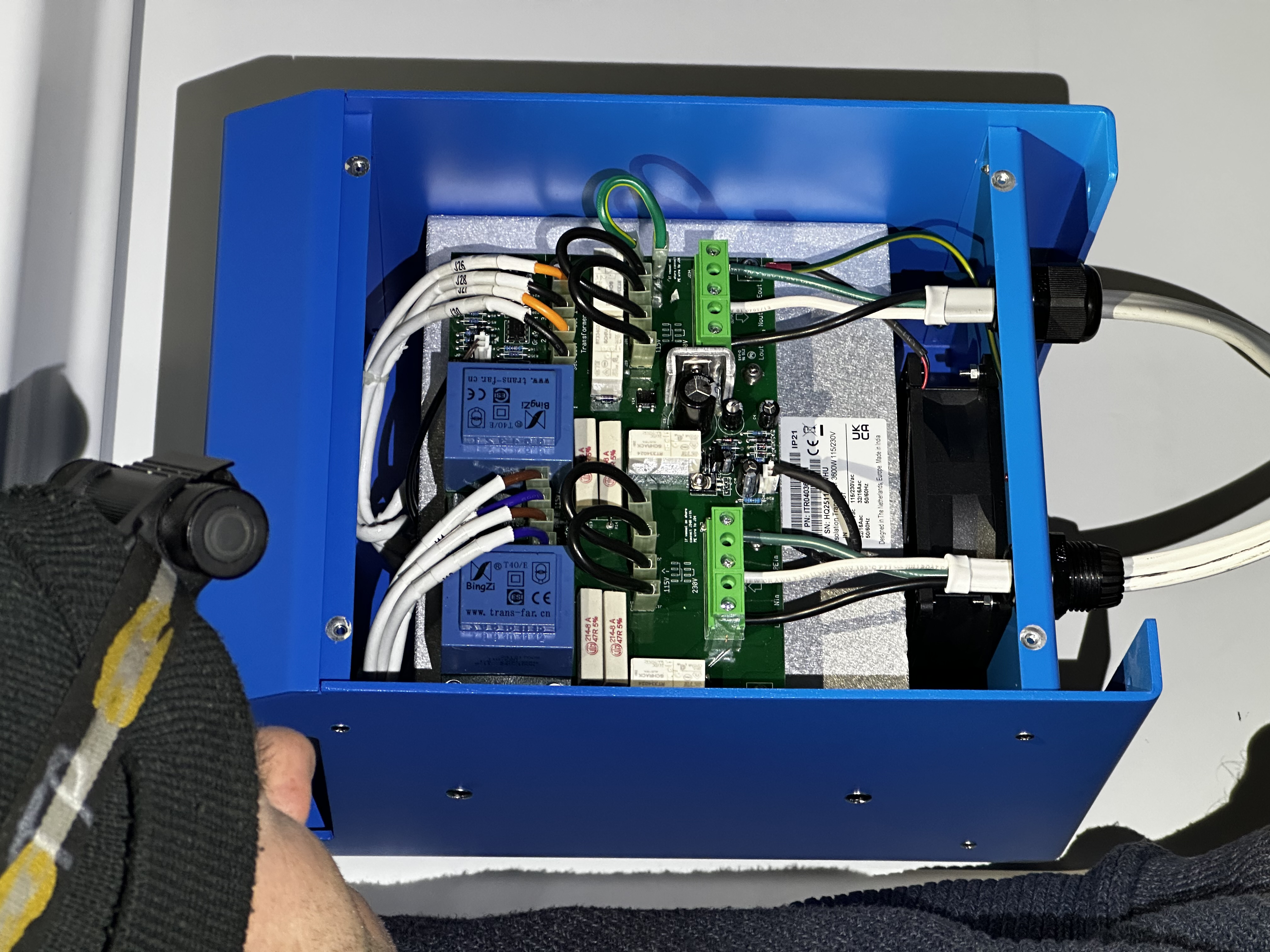
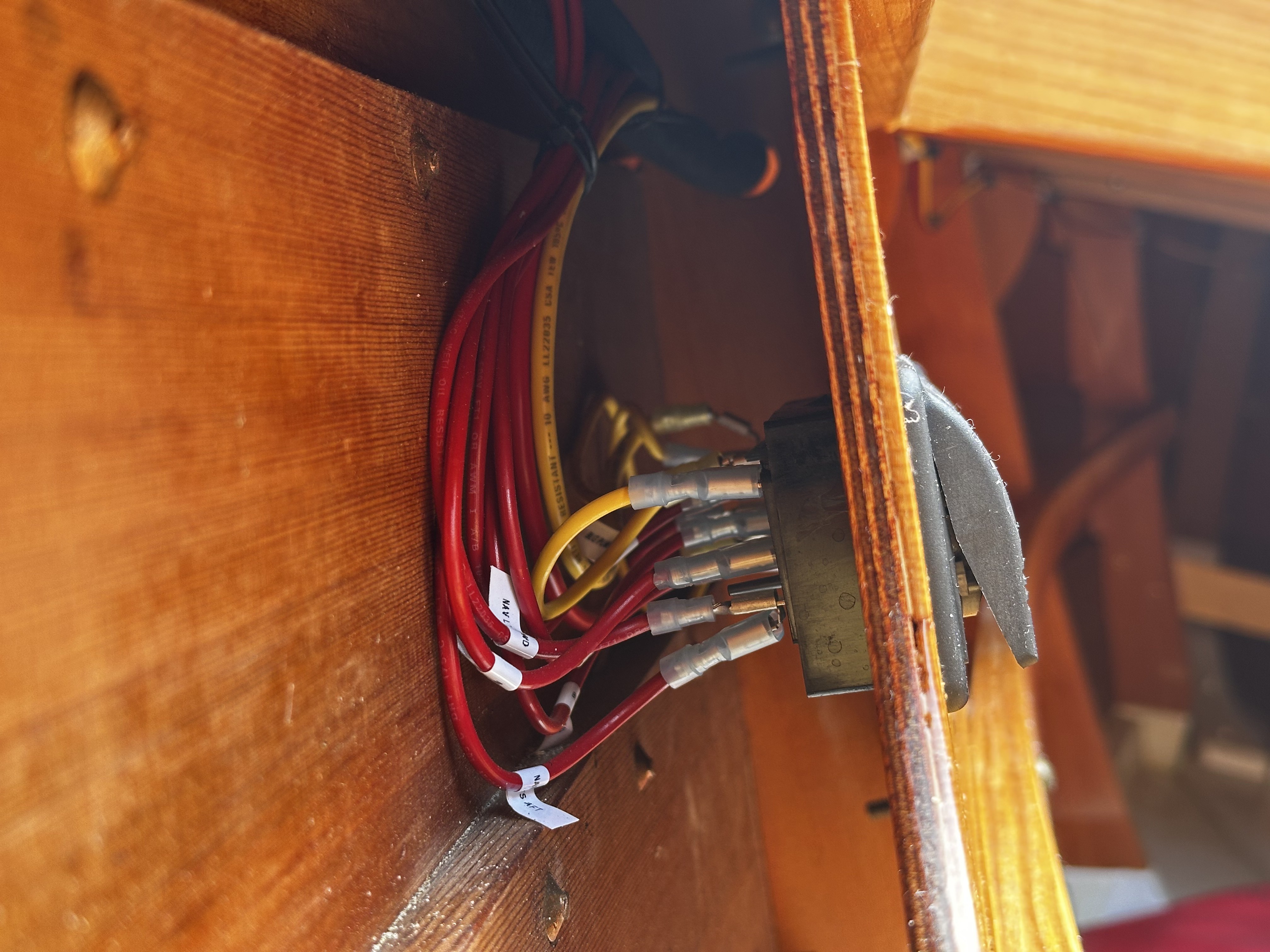
Victron transformer wiring detail - AC conductors routed
Victron transformer internal wiring closeup
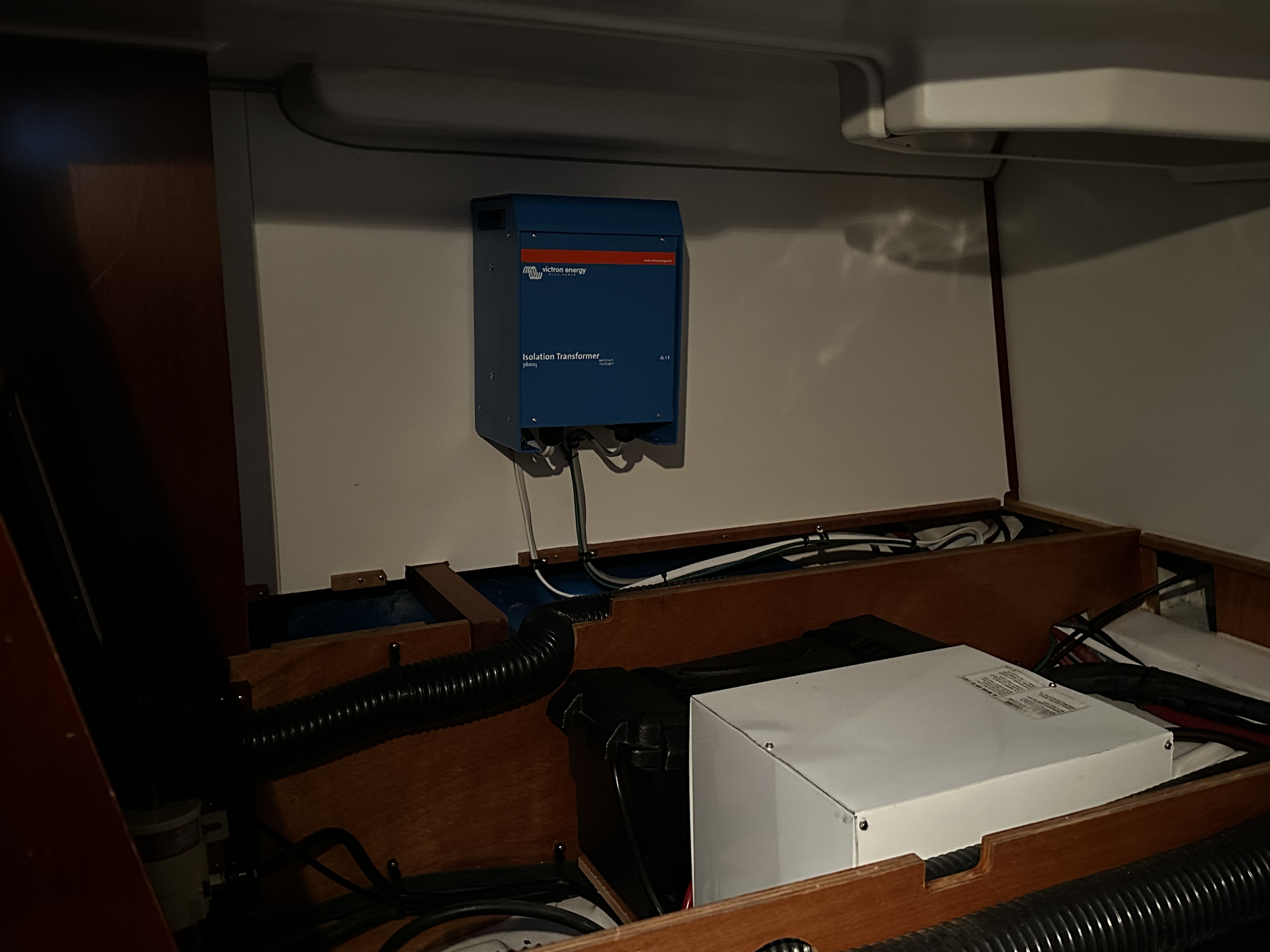
Victron isolation transformer mounted on bulkhead
Shore Power Integration

Victron Isolation Transformer Installation

37' Beneteau Sailboat

Installed a Victron isolation transformer on a 37-foot Beneteau sailboat, integrating it into the vessel's shore power system to improve electrical safety and eliminate galvanic corrosion risks from shore power connections.

The Challenge

Boats connected to shore power are vulnerable to galvanic corrosion — stray currents flowing through the grounding conductor can slowly eat away at underwater metals. The owner needed an isolation transformer wired inline between the shore power inlet and the AC distribution panel to break that galvanic path while maintaining full electrical safety.

Mounting & Structural Considerations

At roughly 50 lbs, the Victron transformer needed a mounting location that could handle significant weight under dynamic sea conditions — heeling, wave impact, and vibration. We evaluated multiple locations in the stern cabin and selected a structurally sound bulkhead that allowed full backside access for through-bolting with appropriate backing hardware. This ensured a secure, permanent installation that could be inspected and serviced in the future.

Electrical Work

Routed and terminated all AC conductors with proper wire gauge selection based on circuit amperage and conductor length, in alignment with ABYC standards. Particular attention was given to the AC grounding conductor to ensure compliance with current-carrying and fault protection requirements. All conductors were installed with proper separation, strain relief, and chafe protection for clean, serviceable routing.

Configuration & Verification

Following installation, configured the system using the VictronConnect app, verifying correct operational settings and confirming the unit was properly integrated into the vessel's existing electrical system.

AC Systems Victron Shore Power ABYC Standards Galvanic Isolation

Skills & Training

Technical skills developed through hands-on training in the NWSWB Marine Systems Program.

ABYC Certifications

  • ABYC Certified Marine Systems Advisor
  • ABYC Marine Systems (passed)
  • ABYC Marine Engines & Fuel Systems (passed)
  • ABYC Marine Electrical (June 2026)

Electrical Systems

  • AC & DC marine electrical
  • Shore power integration
  • Isolation transformer installation
  • Battery systems & charging
  • Circuit protection & distribution
  • Conductor sizing & routing
  • Lighting circuits

Mechanical & Fuel Systems

  • Diesel & outboard engines
  • Engine fuel, cooling & exhaust systems
  • Fuel distribution systems
  • Mechanical steering systems
  • Plumbing & heating systems
  • Thru-hull fittings & hose systems
  • Bilge pump installation
  • Corrosion prevention
  • Equipment mounting & loading

Diagnostics & Monitoring

  • Multimeter diagnostics & fault isolation
  • Victron system configuration
  • NMEA 2000 basics
  • Systematic troubleshooting
  • Voltage drop testing

Fabrication & Finishing

  • Custom console panel design & fabrication
  • Construction & woodworking
  • Aesthetic integration with vessel finishes
  • Marine-grade finishing
  • Clean routing & serviceable layouts

Design & Documentation

  • Schematics & wiring diagrams
  • System documentation
  • ABYC-compliant system design
  • Load calculations & conductor sizing
  • Installation planning & layout
Get In Touch

Contact

Interested in working together or have questions about my projects? I'd love to hear from you.

Port Hadlock, Washington